Membership
Access comes through a production, or through someone already inside. That is the short version, and it is on the front page. This is what stands behind it.
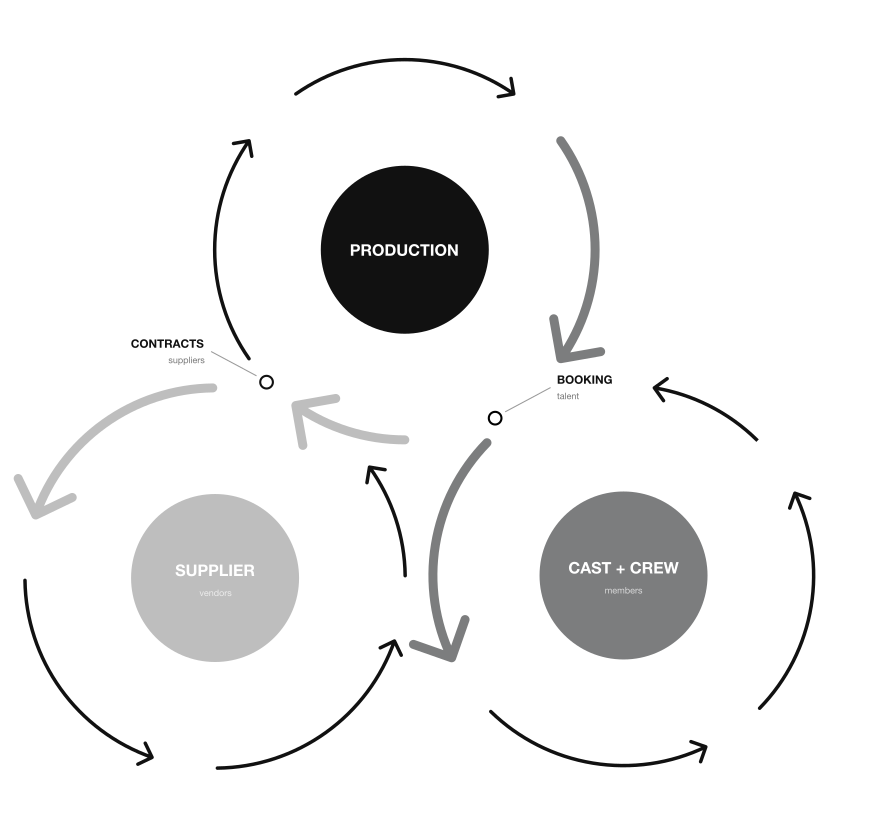
Tradekraft is two things that only work together: a body of working professionals, and the infrastructure their productions run on. Membership is the join between them. It is not a subscription, not a directory listing and not an audience. Nobody buys their way in, which is the only reason being in it counts for anything.
How you get in
Two doors, and a queue for people who have neither yet.
- 01A productionYou get crewed on a job that runs on Tradekraft and you come in with it. There is nothing to apply for and nothing to fill in first. The production already knows who you are: it hired you.
- 02Someone already insideA member puts your name forward. That is an act with their name on it, not a referral code, and it is the older of the two doors. It is how most of us got our first job.
- 03Neither, yetThe waitlist. We will not pretend it is a fast door. It means we hold your name and come to you when a production or a member reaches you, which is honest about what it is: a queue behind two doors that open from the inside.
An invitation is a record, not a formality. It is kept, it names who opened the door, and it reads from both sides: you can see who brought you in, and they can see who they brought. Nobody is quietly sponsored. That is deliberate. A house where nobody is accountable for who they let in is just a list.
What it costs
Productions pay for it, out of fees productions already pay.
For the people who do the work it is free, and it stays free. Not free for now, not free while we grow, not free until we find out what the market will bear. Free because you were never the customer. A house that charged its members for the privilege of being counted would be selling the one thing that makes it worth joining.
What a production pays, and how, is a conversation with that production, not a number on a public page.
What you get
Four things, and they are the whole reason for the rest of it.
-
01
One record, entered once
Your details, your rates, your documents, your gear. You enter them a single time and they arrive already filled in on every production entitled to see them. The tenth job costs you nothing to start, and the people hiring you stop asking for the same paperwork they were sent last year.
-
02
Credits that stay attached
The work you did stays yours whether the company still exists, the show still streams, or anyone remembers to put your name on it. A credit here is agreed by the people who were there, at the time, which is what makes it worth having later.
-
03
A page at your own name
Your credits assembled for you, at an address that is yours, rather than typed up again every time somebody asks for a resume. You choose what appears on it and how it reads.
-
04
A production that knows its own cost
The largest of the four. Every production held as its own thing, with its own people, vendors and obligations, so what a job actually took is known while it is running instead of a year after it wrapped.
What we don’t do
Specific, so you can hold us to it. We do not:
- 01Sell your data, in any form, to anyone
- 02Share your rates without your consent
- 03Rank members, or sell a better position
- 04Run a feed, followers or likes. This is not a social network
- 05Take a percentage of what you are paid
- 06Read a production’s numbers to target ads at you
Anonymised counts as selling. So does an acquisition. If we ever want to change one of these it will be asked for rather than announced, and saying no will not cost you your membership.
Leaving
You can go. Close the account and you stop being reachable here, and everything that is only yours goes with you: your details, your documents, how you chose to present yourself.
What you cannot do is unmake the record, and it is better to read that here than to discover it later. A credit is a fact about work that happened, agreed at the time by people who were there. You can hide it, and hidden means gone from every page anyone can see. It does not mean deleted, because a production’s history is not yours alone to edit, any more than it is ours.
The line falls between what you own and what you were part of. We would rather be plain about where it sits than promise a clean exit from a shared record and quietly not deliver it.